Sign in




 French
 Followers
  Works
Works  About
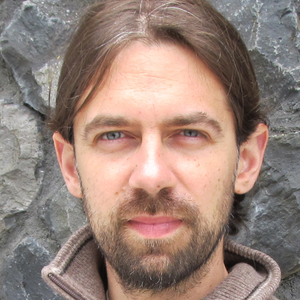
AboutMartin Loridan is an internationally established composer and Professor of contemporary music at the Royal Conservatoire of Brussels.
His works are regularly performed in Europe and beyond by internationally renowned performers such as Claude Delangle, Rohan de Saram, the Arditti Quartet, the ensembles Klangforum Wien, Fractales, Mise-en, Accroche note. His work has been awarded prestigious international prizes, such as the Reinl Foundation Prize (Vienna), the André Jolivet Prize (Paris), the Vareler Prize (Berlin).
He graduated from the Paris Conservatoire National Supérieur de Musique (CNSM) where he obtained four prizes in harmony, counterpoint, fugue and forms, and 20th/21st-century composition. He completed his PhD at the University of Leeds, UK, thanks to prestigious academic grants and awards such as the Stanley Burton Research Scholarship and the Leeds Doctoral Scholarship. He is also the recipient of the Art Research Fund (Fonds de la recherche en Arts FRArt) by the National Fund for Scientific Research, Belgium (FNRS).
His doctoral research is an investigation into air and breath (‘souffle’) as a composition material. His research has led him to the study of traditional music (Villa Salammbô residence with the support of the French Institute in Tunis) and the development of new instrumental hybridizations: extended pedal system renewing the possibilities of the piano; works for the Naylute, a new hybrid instrument between the Arabic Nay and the Western flute; application of electric guitar pedalboards systems to other instruments such as the accordion. In these different contexts, he could develop the main axes of his research: the 'tactility' of breath (souffle) and its double human and instrumental resonance; the porosity of air (as a sound material) and its development within orchestral forces and electronic expansions in amplified works.
Passionate about the transmission of knowledge, he has been invited as a visiting professor at institutions such as the Royal Academy of Music (London), the Stony Brook University (New York), and the National University of Arts (Astana).
His scores are published by BabelScores.
http://www.martin-loridan.com
 Works
Works


 48
48
 2
2